Starry Bottle
Starry Bottle is a real-time shader that renders glitter suspended inside a liquid, rather than sitting on a surface. The flakes tumble, catch the light at different angles, and sit at different depths in the bottle, so the liquid reads as having real volume instead of a printed texture.
I built this as a technical art intern at Tencent. My mentor let me choose which visual effect to take on, and I picked this one deliberately. Glitter is a well-studied problem, but the work I could find treats it as a surface property — car paint, cosmetics, fabric. Suspending it inside a liquid changes the problem: the flakes now need depth, tumbling motion, and the liquid’s own absorption. That gap is what made it worth doing.
Breakdown
Glitter inside a liquid is considerably more complex than glitter on a conventional surface, because the flakes constantly tumble and change orientation in the water, and they carry the volumetric feel of the liquid itself.
Real life reference
How it works
The sense of volume is built from two stacked parallax layers. Each layer is computed identically; two variations between them create the impression of “suspended particles with real thickness inside a liquid”:
- Multi-layer parallax — each layer offsets its sampling coordinates along the view direction by its own
depthlevel. The layers are staggered, which produces parallax, which reads as depth. - Water absorption — deeper layers accumulate more water-color attenuation (a Beer–Lambert approach), so the lower layer is darker and more heavily tinted. The result is a translucent volume: bright at the edges, dark through the core.
Textures
Each layer samples two textures.
Glitter normal map
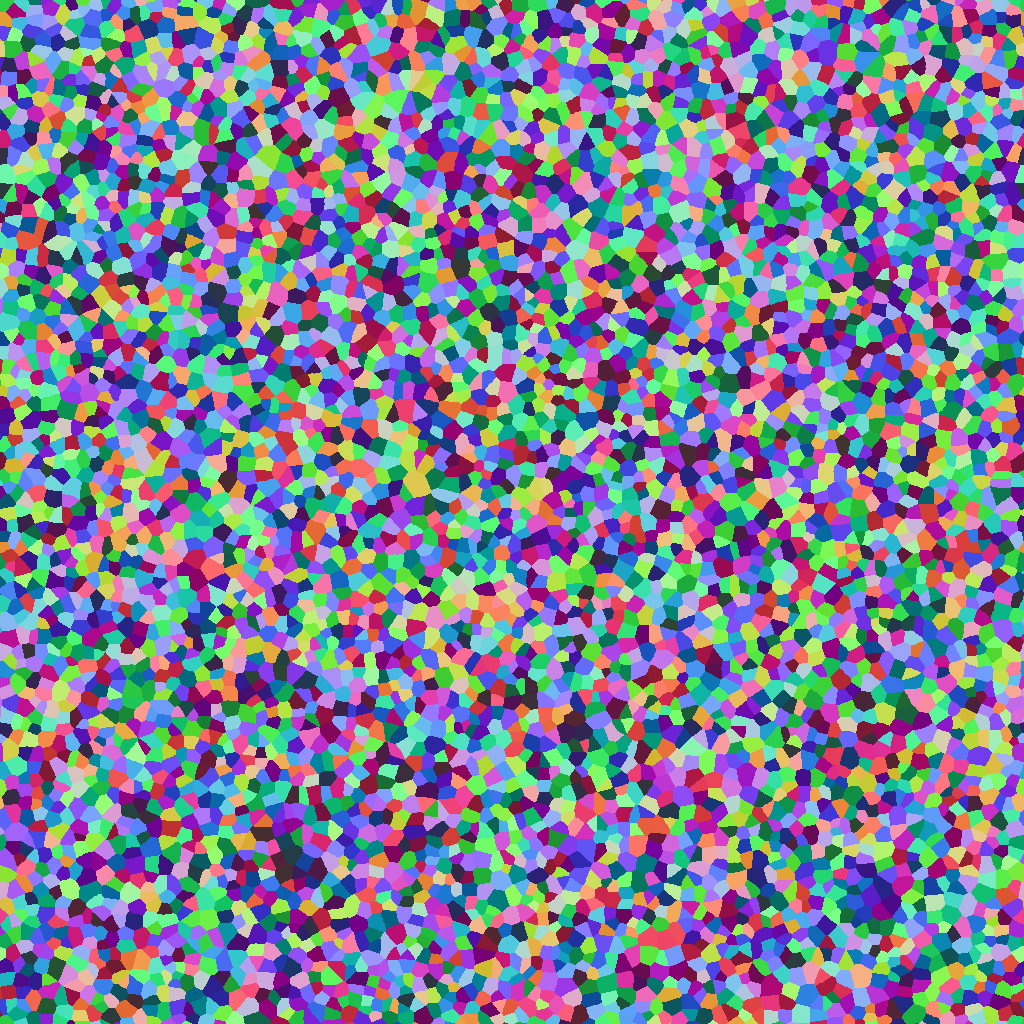 RGB — random world-space normals
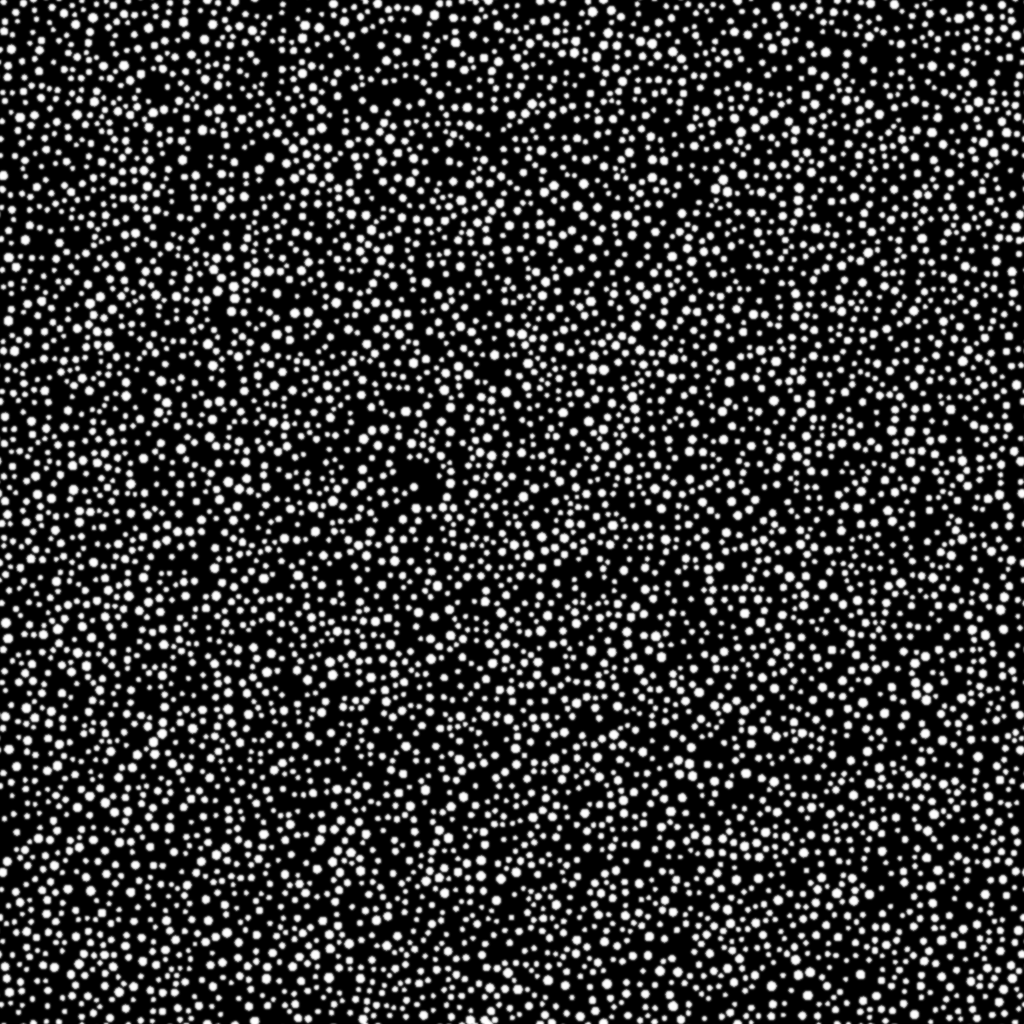 A — the mask defining flake shape and coverage
The RGB channels store random world-space normals, which guarantees the flake distribution is completely random. The map can be generated by uniformly sampling directions on a sphere.
Using tangent space instead would make the flakes feel pasted onto the surface, because a tangent-space normal distribution follows the surface normal rather than being genuinely random. The normals can also be rotated dynamically to simulate particles tumbling in the water, which is what produces the twinkle.
The alpha channel carries the mask that defines each flake’s shape and coverage.
Per-flake randomization mask
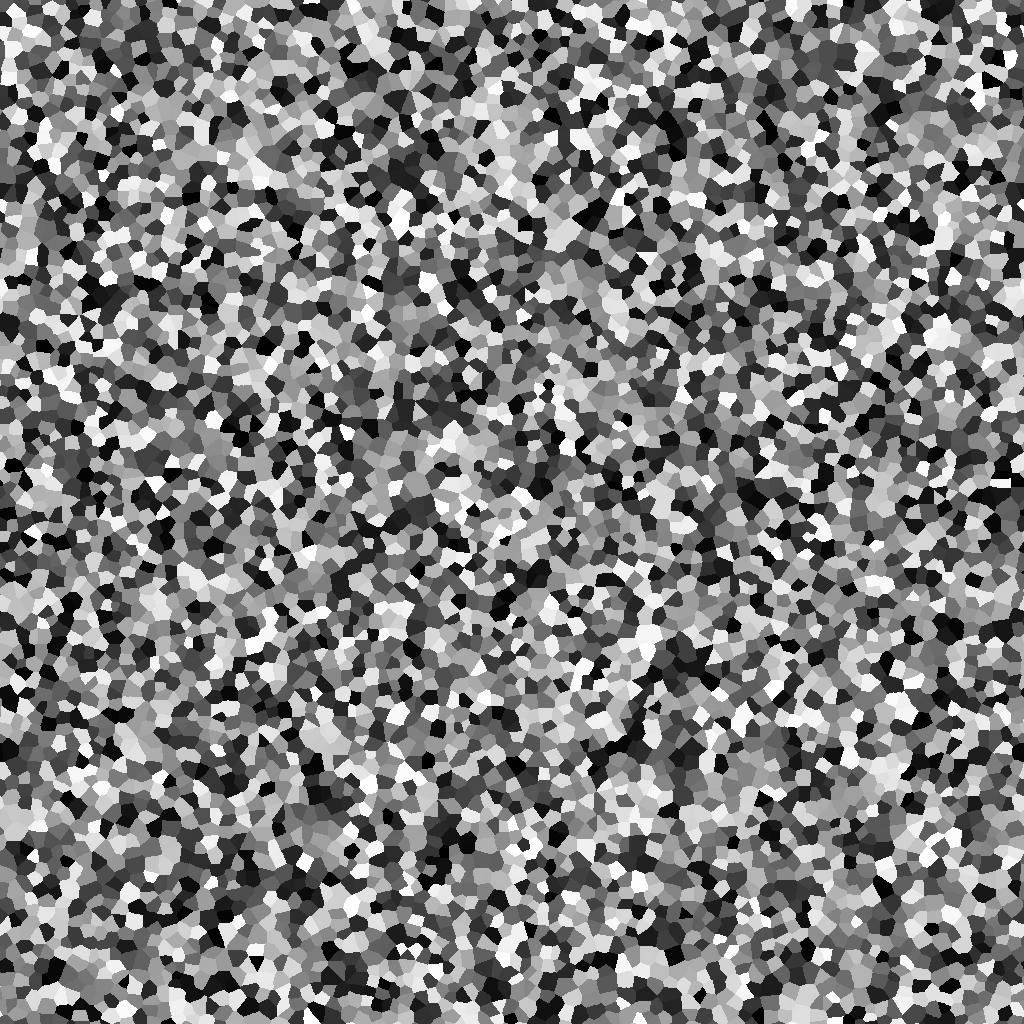 R = offset — a random value per flake, used to sample the LUT so every flake picks up a different color
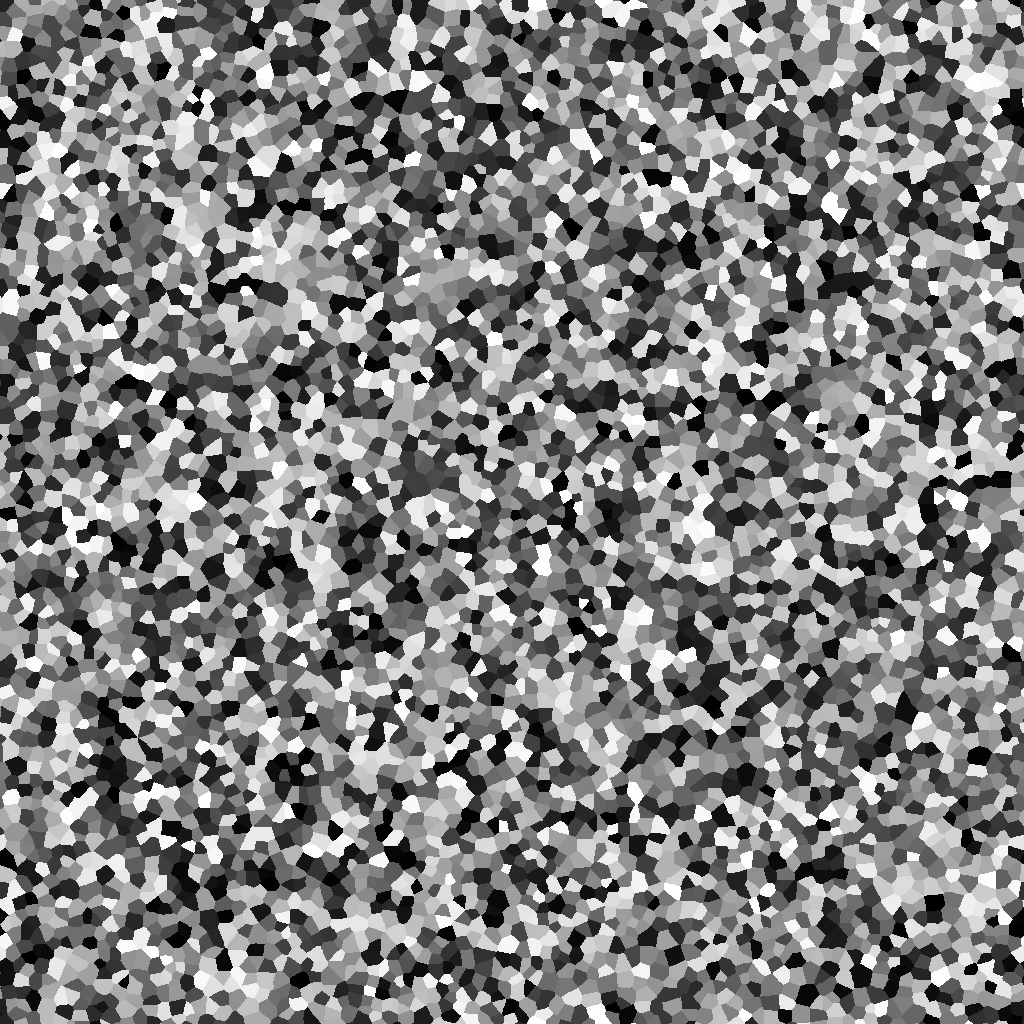 G = depth — a random value per flake, used to fine-tune its depth within the layer
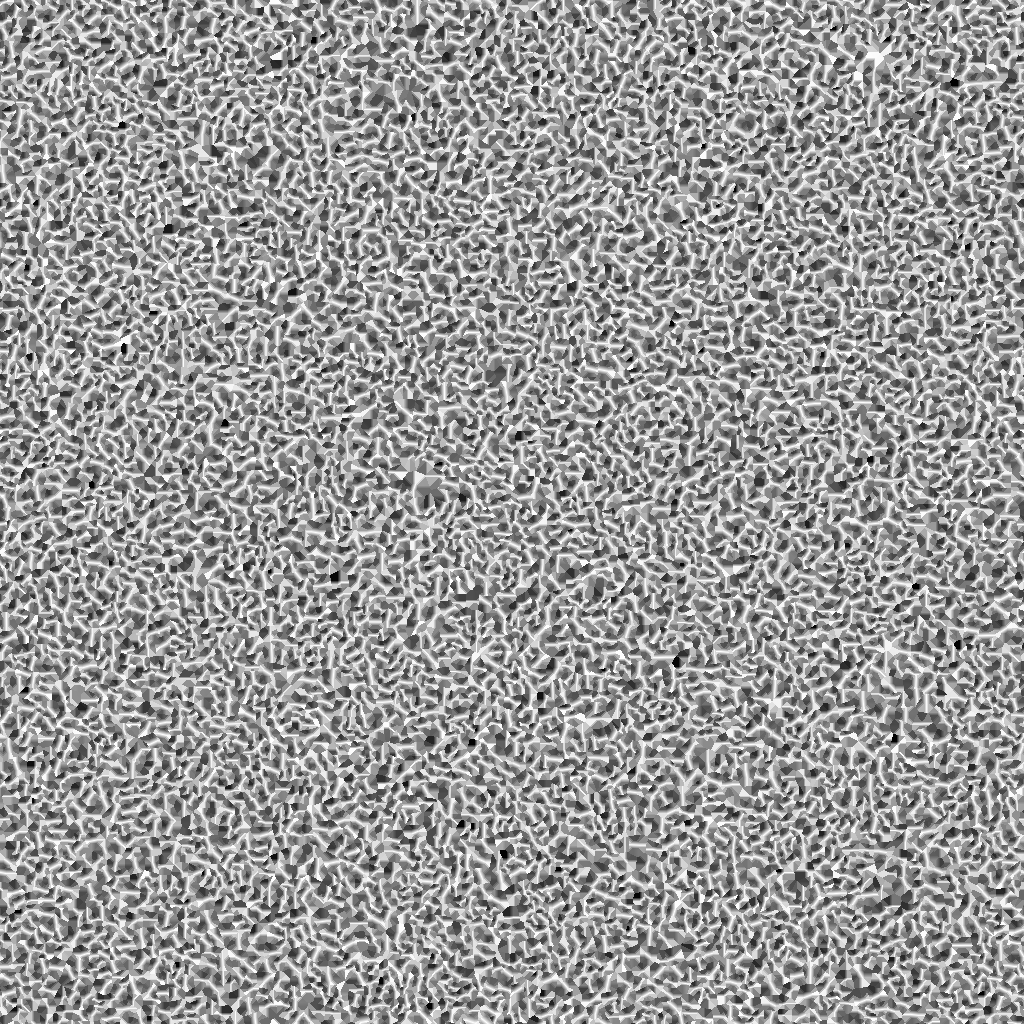 B = gradient — a gradient that subtly modulates brightness inside each flake
The random normals and the random
offset/depthvalues are three decoupled sources of randomness, which keeps both the spatial distribution and the color distribution of the flakes irregular.Note also that every texture except the mask bleeds past the flake edges. This prevents edge pixels from blending with the background color during sampling, which would otherwise produce incorrect results.
Glitter brightness
The lighting is an ordinary Blinn-Phong specular term. What makes it read as glitter is the normal it is fed: instead of the surface normal, each flake uses a random world-space normal sampled from the texture, so neighboring flakes catch the highlight at completely unrelated angles.
float brightness = pow(saturate(abs(dot(N, H))), specPow);
His the standard Blinn-Phong half vector, between the view directionVand the main lightL. The only departure from the textbook form is theabs, which stops a negative dot product from crushing large regions to black once the normals are pointing in arbitrary directions.- The moment the camera or the main light moves,
dot(N, H)changes, so flake positions and brightness jump — and that is the sparkle. specPowis the specular exponent, and here it doubles as a density control: a tighter highlight means fewer normals fall inside it, so the higher thespecPow, the fewer flakes appear.
Looking closely, flake brightness is tiered rather than continuous.
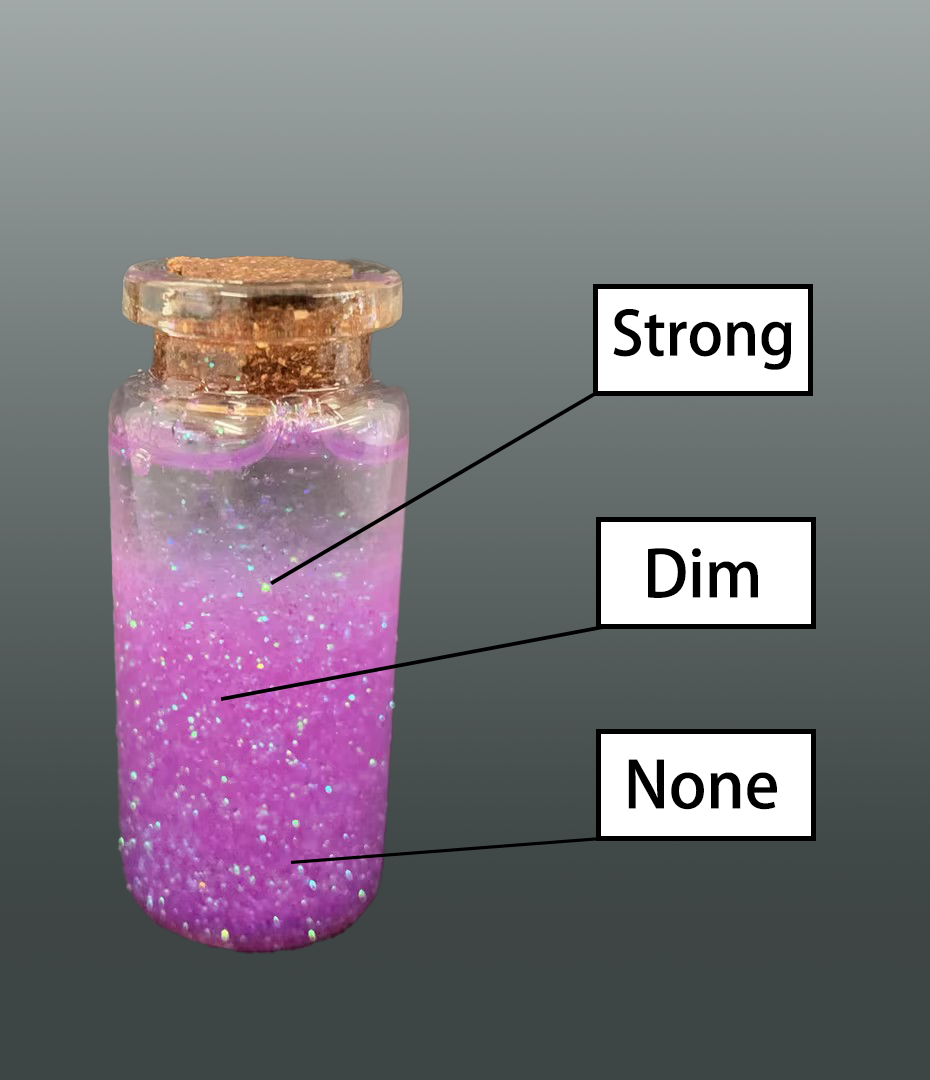 Distribution of flake brightness across the three tiers
| Tier | Share | Brightness / color | LUT | Flake setup |
|---|---|---|---|---|
| Strong | ~10% | Very bright, iridescent | sparkleLUT |
High specPow |
| Dim | ~40% | Darker, almost colorless | sparkleLUT, desaturated |
Low specPow |
| None | ~50% | Non-emissive, the glitter’s own base color | bgLUT |
Everything that is neither strong nor dim |
Glitter color
Brightness alone would give a field of white sparkles. The color comes from the offset value in the mask’s R channel — the per-flake random number described above. That value is used directly as a UV coordinate into a color LUT, so each flake reads a different point along the ramp and therefore a different color.
// offset is the per-flake random value sampled from the EMask R channel
float2 lutUV = float2(offset, 0.5);
float3 flakeColor = Texture2DSample(ColorLUT, ColorLUTSampler, lutUV).rgb;
Because the offset values are random and decoupled from the normals, neighboring flakes land on unrelated parts of the ramp, so the color distribution ends up as irregular as the spatial one.

sparkleLUT — the spectral ramp the lit flakes sample, running blue through green to red

bgLUT — the muted rose-to-lilac ramp for flakes that stay unlit
The reason for going through a LUT rather than computing a color procedurally is artistic control. The palette lives in a texture, so an artist can redraw the ramp and change the entire look of the glitter without touching a line of shader code — swapping an iridescent rainbow for a warm gold, tightening the hue range, or desaturating the whole set.
Motion
Everything up to this point is static. The flakes sit wherever the textures place them, and only the lighting changes as the camera moves. The last piece was making the bottle’s own movement move the glitter inside it.
The whole system is pure Blueprint. Blueprint tracks the bottle’s orientation, integrates a displacement for the glitter, and hands the material a single motionOffset vector, which is added to the sampling coordinates of both parallax layers. There is no simulation in the shader and no per-flake state anywhere — however the motion is computed, it reaches the material as two floats.
I built a small demo that lets me rotate the bottle and watch the flakes respond, and used it to try two different characters of motion.
Jelly — the flakes drift with the tilt, then settle back to where they started
Liquid — the flakes keep whatever position they are pushed to and never return
The material is identical in both. The whole difference is in how Blueprint drives motionOffset over time.
Reading the bottle
Both models start from the same measurement. Each frame the bottle’s rotation is converted to a quaternion and multiplied by the inverse of the previous frame’s, which gives the delta rotation. Decomposing that into an axis and an angle gives an angular speed, and the cross product of the bottle’s up vector with the rotation axis gives the direction the liquid is being dragged.
Jelly
The first version treats the glitter as if it were held in place elastically: a spring model, where the offset is pulled back toward its rest position. Tilt the bottle and the flakes lag behind, but let go and the restoring force returns them exactly where they started.
Liquid
The second version drops the restoring force entirely. The offset just accumulates, and damping only slows the flakes rather than pulling them home, so wherever the motion carries them is where they stay. That one missing term is the whole difference between a thick gel and a free liquid.
Both models expose the same handful of dials — rotation strength, gravity, damping, and the tilt of the liquid surface — so either character can be dialed in without touching the material.
Because this was exploratory work rather than a feature with a target, I handed over both rather than picking one. They suggest different contents: the jelly version reads as a thicker, more viscous medium, while the liquid version reads as thinner, with the flakes more freely suspended.